
Bank of Canada Rate: Impact on GTA Real Estate
Bank Of Canada, Overnight Rate, Inflation Trends, Canada Economy, Tiff Macklem, Stagflation, Greater Toronto Area Real Estate
Bank of Canada Holds at 2.25%: The Stagflation Trap and What It Means for GTA Buyers and Sellers
The Bank of Canada has kept its Overnight Rate at 2.25% for the fifth straight decision. On the surface, it looks like “no news.” In reality, Governor Tiff Macklem’s comments signal a complex, uneasy balance: a Canada Economy wrestling with stagflation—weak growth paired with stubborn inflation. For buyers and sellers in the Greater Toronto Area, this isn’t just macroeconomics; it directly shapes mortgage costs, home prices, and how quickly properties move. The Affordable Homes and Condos - Ali Bolourchi Real Estate (A.B.R.E.) Team is breaking down what this means and how you can move forward confidently.
Why the Bank of Canada Held: The Stagflation Trap
When the Bank Of Canada announced on September 2, 2026, that it would keep the target for the Overnight Rate at 2.25%, many expected exactly that outcome. Markets had largely priced in a hold. What mattered more was Tiff Macklem’s explanation: the Bank is effectively caught in a stagflation trap.
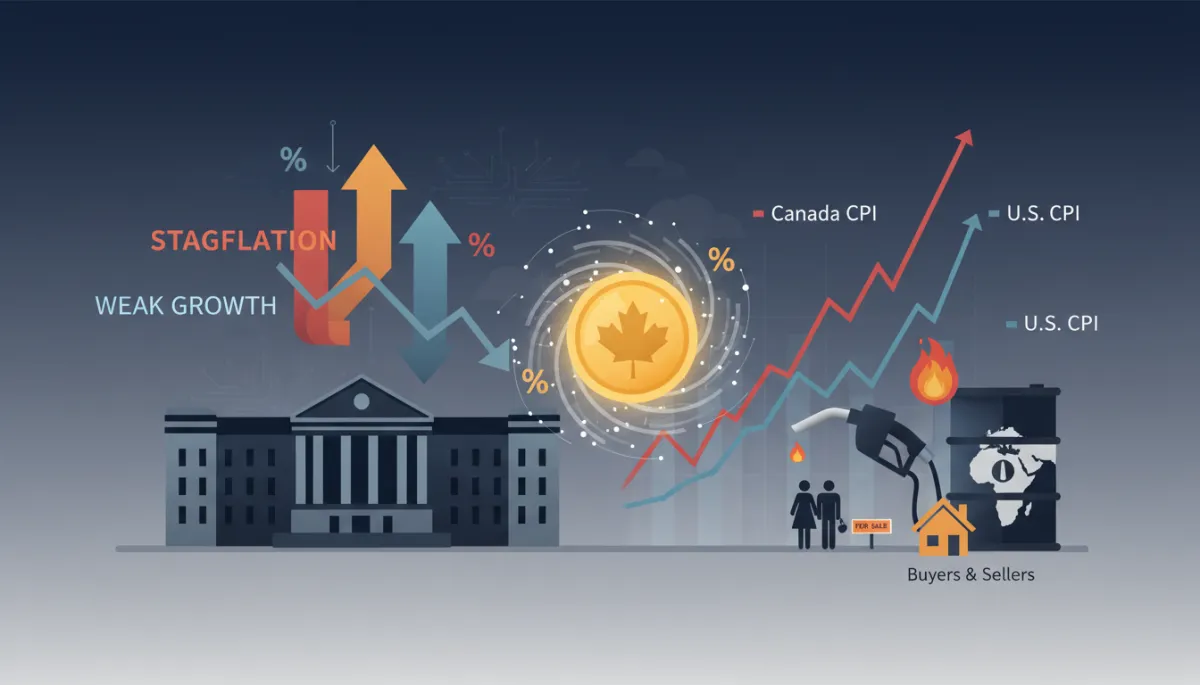
Stagflation is the uncomfortable mix of sluggish economic growth and elevated inflation trends. It limits the Bank’s room to maneuver. If growth were strong, the Bank could raise rates aggressively to cool inflation. If inflation were low, it could cut rates to stimulate the Canada Economy. But with both problems showing up at once, every move carries meaningful risk—especially for interest-sensitive sectors like housing in the Greater Toronto Area (GTA).
Macklem’s message was clear: the Bank is trying to wait out temporary inflation pressures without choking off an already fragile recovery. That’s why this fifth consecutive hold feels less like confidence and more like caution. For real estate buyers and sellers, this means a period of relative rate stability—but not necessarily economic comfort.
Canada’s Unique Stagflation: Weak Growth, Rising Prices
Canada’s stagflation challenge is different from what we’ve seen in past cycles. Growth has been disappointingly soft, with business investment and productivity lagging. At the same time, Canadians are still facing higher prices at the pump, the grocery store, and in transportation. This combination squeezes household budgets and leaves less room for saving toward a down payment or handling carrying costs on a home or condo.
According to recent data through August 2026, overall CPI inflation in Canada has been running at around 3.0% year-over-year, above the Bank of Canada’s 2% target. Yet, measures of core inflation—like CPI-trim and CPI-median—are closer to that target, hovering near 2% (Bank of Canada; Statistics Canada). This split between headline and core tells a crucial story: certain categories are doing most of the damage, while underlying price pressures are more contained.
For many families in the GTA, wages have not kept pace with these rising costs. That’s the essence of stagflation: your income feels stuck, but your expenses keep creeping higher. For first-time home buyers and affordable home seekers, this makes qualifying for a mortgage and building a realistic budget more challenging—even if the Overnight Rate itself isn’t moving much right now.
The Risks of Raising or Cutting Rates in a Stagflation Environment
The Bank of Canada is walking a tightrope. Both raising and cutting the Overnight Rate carry serious risks in the current environment, which is why Macklem’s commentary is so carefully worded and why markets listen closely between the lines.
What if the Bank Raises Rates?
Higher borrowing costs: A rate hike would immediately translate into higher variable mortgage rates and higher qualifying rates for fixed mortgages. For GTA buyers, especially first-timers, this can mean a smaller approved budget or falling just short of qualifying at all.
Weaker growth and jobs: Businesses already facing soft demand could pull back further on hiring and investment. That can slow wage growth or even lead to job losses, further undermining housing demand and household confidence.
Downward pressure on home prices: In some GTA segments, particularly higher-priced condos and detached homes, a rate hike could push more sellers to cut prices to meet a smaller pool of qualified buyers.
What if the Bank Cuts Rates?
Risk of re-accelerating inflation: Cutting the Overnight Rate while headline inflation is still around 3% could send the signal that the Bank is backing away from its inflation fight. That can weaken the Canadian dollar and make imports more expensive, feeding inflation trends further.
Potential housing froth: Lower rates might spark another wave of speculative activity in certain real estate pockets, pushing prices up faster than incomes and making “affordable” homes even harder to find over time.
Credibility concerns: If the Bank is perceived as too quick to ease, it risks losing credibility on inflation, which can raise long-term borrowing costs anyway as markets demand a higher risk premium.
In short, the Bank is staying put at 2.25% because both directions are dangerous. For GTA buyers and sellers, this likely means a period where rates are stable but not low, and the focus shifts to household strategy rather than hoping for a quick rate cut rescue.
The Inflation Picture: CPI, Gasoline, and What’s Driving Prices
Recent CPI data through August 2026 shows Canada’s headline inflation running at 3.0% year-over-year, unchanged from July (Statistics Canada). But the story behind that number is crucial for understanding where the Bank of Canada might go next—and how that affects your mortgage and housing decisions.
Gasoline and transportation: Transportation costs are up around 7.5% year-over-year, with gasoline prices playing a major role. The Bank itself has highlighted persistently elevated gasoline prices as a key driver keeping headline inflation near 3% (Bank of Canada).
Inflation excluding gasoline: Strip out gasoline, and inflation looks more manageable, at about 2.4%. That’s still above target, but it suggests most categories are not spiraling out of control.
Food and shelter: Food purchased from stores is up roughly 2.8%, while shelter costs are up about 1.5% year-over-year. For GTA households, these are everyday essentials that eat into the same budget that would otherwise support a mortgage payment.

Stable but elevated rates reward buyers who plan ahead and lock in informed decisions.
For the Bank Of Canada, this mix of data is exactly why it talks about “patience.” If gasoline prices ease, headline inflation could drift closer to 2% without dramatic rate moves. But if fuel costs stay high or spike further, the Bank may feel pressure to act—even if growth is still weak.
Canada vs. U.S. Inflation Trends: Why the Comparison Matters
Canada does not operate in a vacuum. The U.S. Federal Reserve’s decisions and U.S. inflation trends heavily influence the Canada Economy and the Bank of Canada’s room to maneuver—especially through the exchange rate and trade flows.
As of August 2026, U.S. headline CPI inflation was around 3.4% year-over-year, slightly higher than Canada’s 3.0% (U.S. Bureau of Labor Statistics). Core inflation in the U.S. (excluding food and energy) stood near 2.4%, similar to Canada’s inflation excluding gasoline. Both countries are wrestling with elevated energy costs, but the U.S. has seen a stronger month-over-month pickup in prices, with a 0.4% rise in August versus Canada’s 0.2% increase on a seasonally adjusted basis.
If the U.S. keeps inflation higher for longer, the Federal Reserve may hold or even raise rates, which can put downward pressure on the Canadian dollar if the Bank of Canada doesn’t keep pace.
A weaker Canadian dollar makes imports more expensive, adding another layer to Canada’s inflation trends—again, especially in energy and goods priced in U.S. dollars.
For GTA real estate, the Canada–U.S. comparison matters because it shapes expectations. If markets believe the Fed will stay tighter for longer, they may expect the Bank of Canada to mirror that stance, keeping Canadian mortgage rates higher for an extended period. This reinforces the need for buyers and sellers to plan for a “higher for longer” environment rather than waiting for a rapid return to ultra-low rates.
Triggers for Future Rate Moves: Geopolitics, Tariffs, and More
While the Bank of Canada is holding now, several external triggers could force its hand in the coming months. Understanding these helps GTA buyers and sellers frame their timelines and expectations more realistically.
Middle East Instability and Energy Prices
Tensions or conflict in the Middle East can disrupt global oil supply, pushing up crude prices and, by extension, gasoline prices in Canada. We’ve already seen how elevated gasoline prices have kept headline CPI around 3%. A further spike would:
Increase transportation and shipping costs, feeding into the price of almost everything—from building materials to groceries.
Put more pressure on household budgets, leaving less room for mortgage payments or savings toward a down payment.
Force the Bank of Canada to consider whether inflation expectations are becoming unanchored, potentially justifying a rate hike despite weak growth.
U.S.–Canada Tariff Risks and Trade Tensions
Another potential trigger is the risk of new or renewed U.S.–Canada tariffs. If trade tensions rise and tariffs are imposed on key goods, the result could be:
Higher prices for imported materials, including construction inputs, appliances, and vehicles.
Slower export growth for Canadian businesses, weighing on GDP and employment.
A renewed stagflation squeeze—higher prices but weaker growth—tightening the trap the Bank of Canada is already in.
For the GTA housing market, these triggers can translate into sentiment shifts. Even before rates move, headlines about geopolitical risk or tariffs can make buyers more cautious and sellers more anxious. That’s where strategy, preparation, and expert guidance become critical.
Practical Implications for Buyers: Pre-Approval, Readiness, and Smart Choices
In a world where the Overnight Rate is stable but the economic backdrop is uncertain, preparation is your competitive edge as a buyer. The Affordable Homes and Condos - Ali Bolourchi Real Estate (A.B.R.E.) Team focuses on empowering first-time buyers and affordable home seekers in the GTA to make clear, confident decisions in exactly this kind of environment.
Get Pre-Approved—and Understand Your True Budget
Pre-approval is non-negotiable: With rates at 2.25% and stress tests still in place, a formal pre-approval tells you exactly what you can afford—and shows sellers you’re serious.
Model “what if” scenarios: Work with your lender and your A.B.R.E. Team advisor to see how your payments change if rates move up by 0.5% or 1.0%. Planning for these scenarios reduces surprises later.
Be Ready to Move When the Right Home Appears
Have documents organized: Income verification, down payment proof, and identification should be ready so you can act quickly on a desirable listing.
Clarify your “must-haves” vs. “nice-to-haves”: In a market shaped by stagflation, affordability and stability matter more than chasing perfection. The A.B.R.E. Team uses digital tools to help you filter options efficiently and focus on realistic, value-driven choices.
Use Digital Innovation to Your Advantage
Browse curated lists of affordable homes and condos in real time, tailored to your budget and preferred neighbourhoods.
Take the A.B.R.E. Team’s free First-Time Home Buyer Eligibility Quiz to quickly understand where you stand and what steps to take next.
Practical Implications for Sellers: Strategic Pricing and Smart Marketing
Sellers in the GTA face a different, but equally complex, set of decisions. With the Bank of Canada on hold and buyers feeling the pinch of stagflation, overpricing is riskier than ever, and smart marketing is essential to stand out.
Price Strategically for a Budget-Conscious Buyer Pool
Align with recent comparables: Work with your A.B.R.E. Team agent to analyze the latest sold data—not just list prices—to set a realistic range.
Consider psychological price points: In a market where every dollar matters, pricing just under key thresholds (for example, $699,900 instead of $705,000) can significantly widen your buyer pool.
Invest in Professional, Digital-First Marketing
High-quality visuals and virtual tours: With many buyers cautious and selective, professional photography, 3D tours, and floor plans help your listing rise above the noise and attract serious interest quickly.
Targeted digital campaigns: The A.B.R.E. Team leverages digital innovation to place your property in front of the right buyers—especially those searching for affordable options in specific GTA neighbourhoods.
Be Flexible, but Stay Grounded in Data
Be open to adjusting your price or terms based on early feedback and showing activity. In a stagflationary environment, waiting too long at an unrealistic price can cost you more than a timely, modest adjustment.
Use your agent’s data on days-on-market, list-to-sale ratios, and buyer traffic to make informed decisions, not emotional ones.
Moving Forward with Clarity in an Uncertain Economy
The Bank of Canada’s fifth consecutive hold at 2.25% is more than a static number; it’s a reflection of a Canada Economy caught in a stagflation trap—weak growth, elevated inflation, and limited policy options. For GTA buyers and sellers, the key takeaway is that waiting for the “perfect” macro moment may not be realistic. Instead, success comes from understanding the environment and acting strategically within it.
The Affordable Homes and Condos - Ali Bolourchi Real Estate (A.B.R.E.) Team is committed to transparency, client empowerment, and digital innovation. Whether you are a first-time buyer trying to decode Inflation Trends and the Overnight Rate, or a seller aiming to position your property competitively, you don’t have to navigate this alone.
If you’re ready to explore your options in today’s market:
Take our free First-Time Home Buyer Eligibility Quiz to understand your purchasing power in minutes.
Browse a curated selection of affordable homes and condos across the Greater Toronto Area.
Download our complimentary buyer’s and seller’s guides for step-by-step support tailored to today’s conditions.
Contact the A.B.R.E. Team for personalized advice based on your budget, timeline, and goals.
In a time when economic headlines can feel overwhelming, having a trusted, data-informed real estate partner makes all the difference. The Overnight Rate may be on hold, but your plans for homeownership or a successful sale don’t have to be.